


We present here an excerpt from the interview published by Manuela De Leonardis in Artribune on June 9, 2025, in which the journalist recounts her meeting with New York photographer Kathy Shorr, author of Limousine, in the welcoming setting of her loft in Tribeca.
25 June 2025
New York, May 23, 2025. Pistachio pastries and a cup of green tea accompanied the interview with Kathy Shorr (Brooklyn-born) in the bright and welcoming loft in Tribeca where the photographer has lived since the late 1970s.
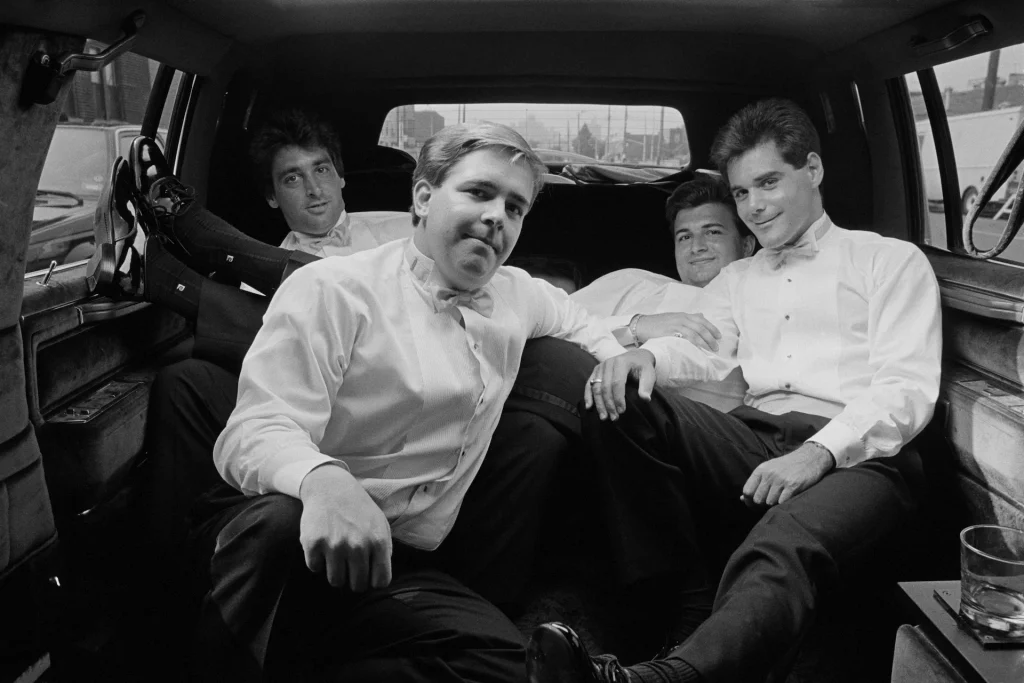
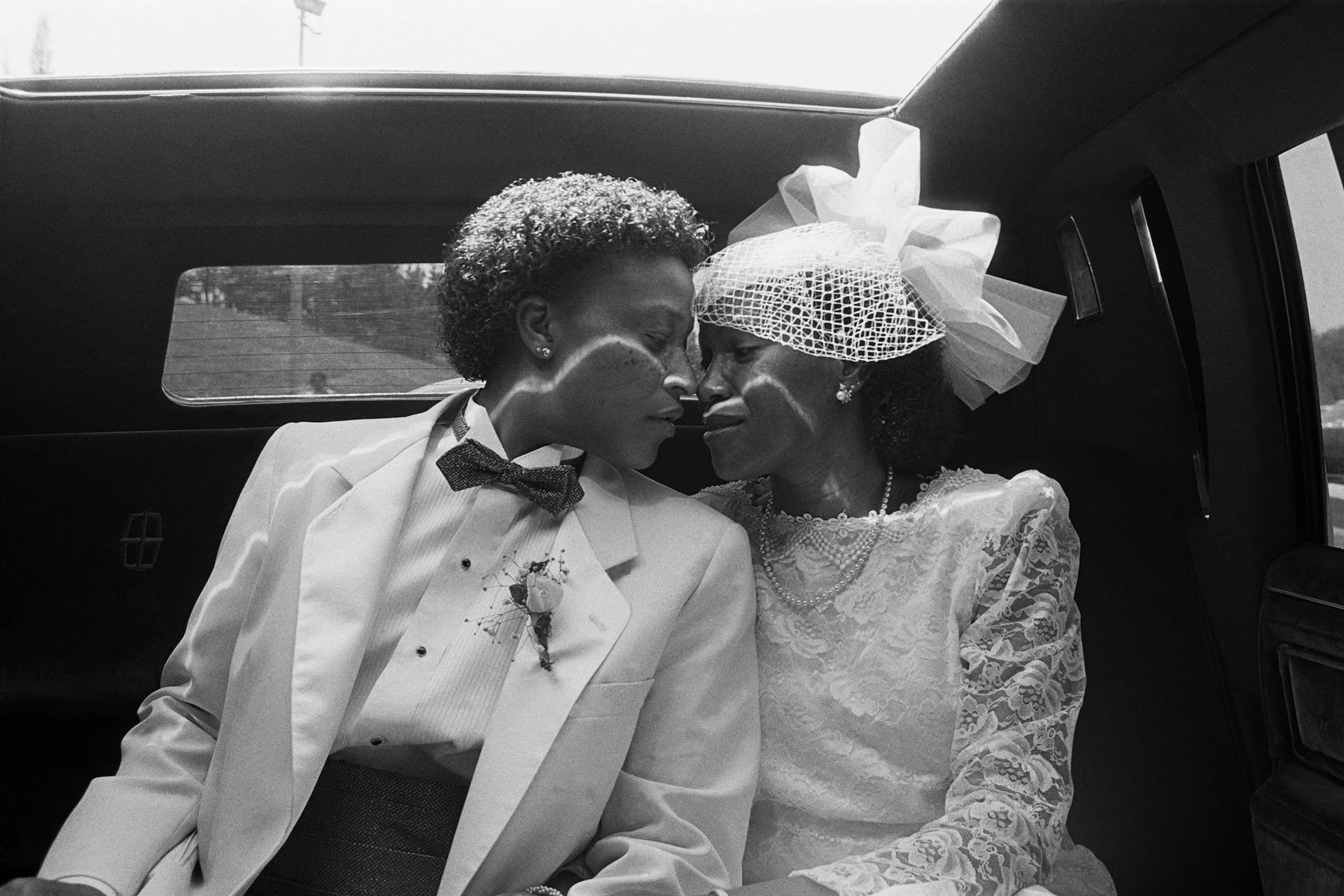
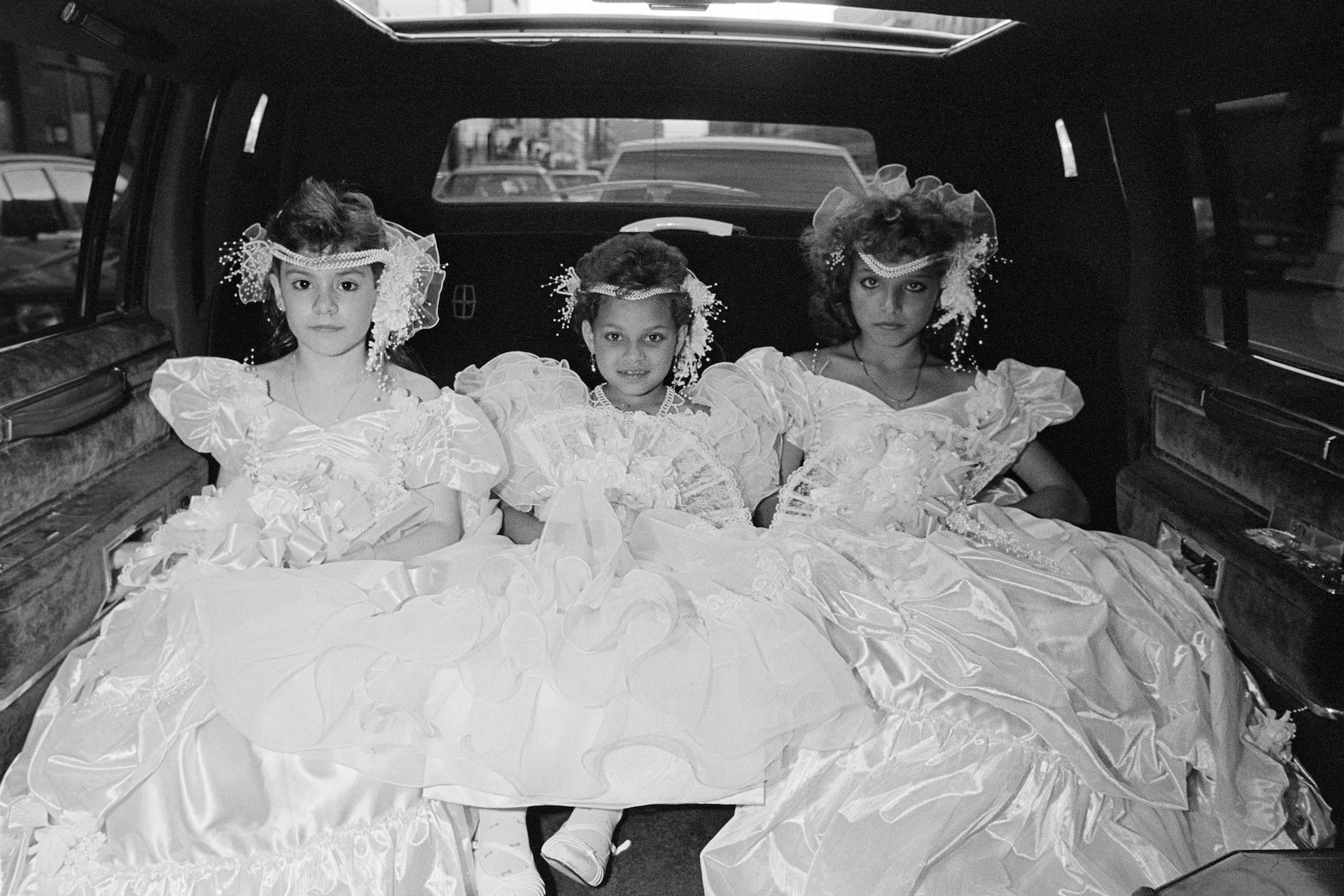
Wandering around the Big Apple has always been a great source of inspiration for her — especially behind the wheel. She still owns a Mini Cooper today, but there was a period, between late 1988 and 1989, when for her graduation thesis at the School of Visual Arts, she drove limousines while photographing the passengers.
A selection of images from the resulting Limousine portfolio was published in The New York Times on December 6, 2018, and presented at the Visa pour l’Image festival in Perpignan. In November 2024, the Italian publishing house Lazy Dog released the book of the same name. We took the opportunity to interview her.
Suggested articles

How did the idea for Limousine come to life?
At first, I was interested in formal photography, but for my thesis at SVA, I decided I wanted to photograph people. I had already spent a whole year working on the theme of ballroom dancing, always using black and white.
Back then, New York’s venues were very eclectic and different from what they are today—many of them don’t even exist anymore. It wasn’t uncommon for former Broadway dancers to open their own studios or lofts, frequented by eccentric people.
Before starting this project, I thought that people who danced already shared a certain intimacy; instead, I realized that most people danced purely for the joy of dancing.
And then, what did you discover?
There were elderly ladies, young people, gay men, heterosexual women of every ethnicity. I found it all fascinating. For my thesis, I wanted to do a project that intrigued me and allowed me to learn through photography, but also to earn some money.
Since I love driving — I’m crazy about any kind of car, sports cars or not — I thought about looking for a job as a taxi driver. But with a taxi, it wouldn’t have worked because everything would have been too rushed.
I like talking to people, trying to make a connection, and driving a limousine seemed like a good idea, considering there would be more time available since the minimum ride was two or three hours.
Suggested books


How did you manage to find a job?
I searched the Yellow Pages and among the companies I found Chrystal Limousine Company, located in Brooklyn. When I went for the interview, I didn’t know what they would ask me—maybe a chauffeur’s license or something else.
Instead, I was hired immediately. They just gave me a 20-minute lesson on how to drive a limousine, which is basically like a regular car; the only differences are the length and the power. Right away, I felt confident that I could do it. I started the very next week.
Tell us more.
I mostly worked on weekends for events like prom night, quinceañeras (celebrations for a girl’s 15th birthday), and weddings. Prom nights were trickier because people stayed out all night, drank, and were mostly teenagers, but weddings went more smoothly.
During work, there could be hours of downtime, but it was still fun, and I always met great people. Once, I drove a gentleman to Lincoln Center and had to wait for him for four hours.
What could I do in the Upper West Side for all that time? There was a cinema nearby, so I parked and went to see Babette’s Feast. I did this job for nine months, driving and photographing the people I chauffeured around.
So, how did the photographic project develop?
Interestingly, when I took this portfolio to the New York Post back then, the photo editor — whose name I don’t remember — asked me why, except for two images where I was reflected in the window glass, there were no photos of me actually behind the wheel.
He was really upset about that and rejected the photos. Around the same time, other photographers had produced work in which they themselves appeared in the shots — in a pre-selfie era. For me, it was different; I was only interested in the people.
For the full article (in italian), please refer to the complete piece on Artribune.
Kathy Shorr is a photographer born in Brooklyn, New York. After the publication of Limousine, her work has been featured in major publications, including The New Yorker, The Guardian, Huck Magazine, Avenue Magazine and Lenscratch. Check her bio.
Manuela De Leonardis (Rome, 1966) is an art historian, journalist, and independent curator. Since 1993, she has been registered with the Journalists’ Association of Lazio, and since 2004, she has written about visual arts for the cultural pages of il manifesto and its supplements Alias, Alias Domenica, and ExtraTerrestre. She also collaborates with Il Fotografo, Exibart, and art a part of cult(ure). With the publishing house Postcart, she has released: A tu per tu con i grandi fotografi – Vol. I (2011), A tu per tu con grandi fotografi e videoartisti – Vol. II (2012), A tu per tu con gli artisti che usano la fotografia – Vol. III (2013), and A tu per tu. Fotografi a confronto – Vol. IV (2017). Among other books she authored are: CAKE. The Culture of Dessert between Arab Tradition and the West (Postcart 2013), Taccuino Sannita. Molisian Recipes from the 1920s (alièno 2015), The Blood of Women. Traces of Red on White Cloth (Postmedia 2019), and Jack Sal. Chrom/A (Danilo Montanari Editore 2019).