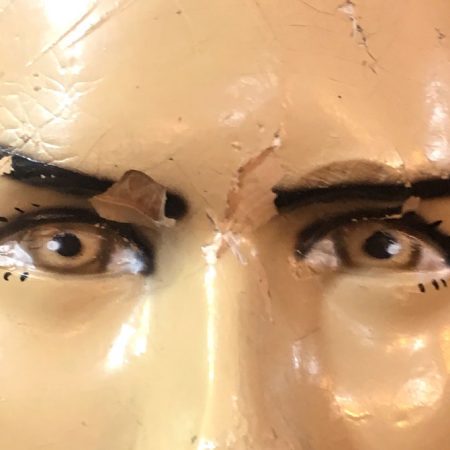
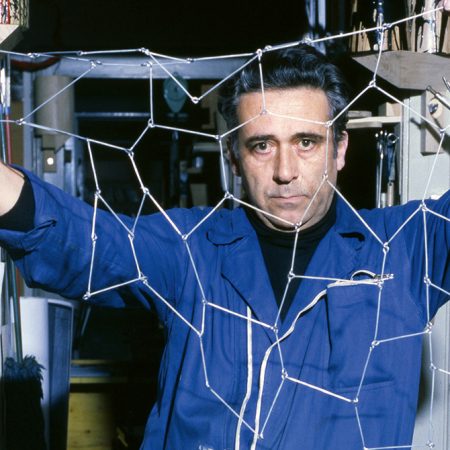
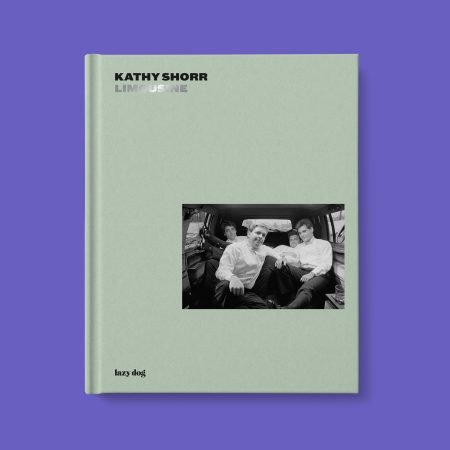
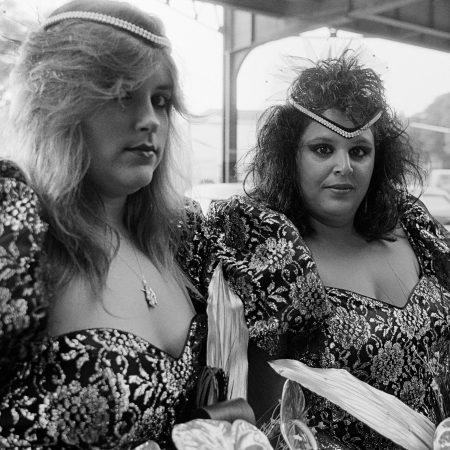
Nuove Traiettorie (‘New Trajectories’) is the special mention and artist residency programme, born within Giovane Fotografia Italiana | Premio Luigi Ghirri, that each year brings a young Italian photographer to Stockholm, to the Italian Cultural Institute, where the work produced is then presented in an exhibition. The winners of the last three editions, whose work is gathered in this volume, are Eleonora Agostini with Leave the Door Open (2023–2024), Claudia Amatruda with Hypersea (2024–2025) and Erdiola Kanda Mustafaj with Un volto non comune (An Uncommon Face) (2025–2026).
The word ‘trajectory’ alludes to movement, a central concept of the whole project that unfolds in several senses. The ‘new trajectories’ are, first and foremost, those of contemporary Italian photography, trends that Giovane Fotografia Italiana has been mapping and supporting for over a decade. They are also those the three artists had to chart during their residency, reinterpreting their research in dialogue with the Swedish context and with the Institute’s far from neutral space, designed by Gio Ponti.
Eleonora Agostini takes walking as her method. In Leave the Door Open, driven by the need to get to know a new place in a short time, she explores Stockholm on foot and builds the work around nature and the home, two primordial elements shared by the Swedish and Italian imaginaries. Images of dense, impenetrable nature alternate with those of the residence interiors, seemingly steeped in calm and silence yet unsettled by small hints of disorientation and unease. In the exhibition, framed photographs alternated with large immersive walls, conceived to bring the vegetation into the Institute’s rooms.
For Claudia Amatruda, the starting point of Hypersea is water, the element that gives rise to every form of life and connects them all. The artist approaches the theme through research in Stockholm’s science museums and in the natural spaces surrounding the city. She then imagines new hybrids inspired by aquatic creatures such as ammonites and marine mammals, interweaving biological and cyborg elements. The body, experienced as a limit or a trap, becomes an occasion to reflect on transformation and on the intimate relationship between organism and prosthesis, within a practice that also moves through self-portraiture. In the exhibition, installation, video and photography coexist in an organic narrative, while one of the most intense performances was filmed in the Institute’s auditorium and later screened in that same space, in direct dialogue with Ponti’s architecture.
Erdiola Kanda Mustafaj’s work, finally, takes its cue from the lecture Joseph Brodsky gave in Stockholm in 1987 on receiving the Nobel Prize, in which the writer argues that language, not land, is our only true homeland. Un volto non comune carries this idea into visual language and turns photography into a living archive, able to preserve what has passed and to give back what still inhabits everyday life. The project sets two personal archives in dialogue: the images of Maria Jaconelli, a Swede of Italian descent with whom the artist forms a deep bond, and those newly made during the residency. In the exhibition, photographs and negatives on retro-illuminated lightboxes, alongside video and archival material, build a sequence that crosses two worlds and two times. Human presence never appears directly, but can be sensed through its traces: abandoned chairs, building façades, a light left on. In the background resonates the reflection on displaced Italianness that underlies Ponti’s own project.