


There is a book that grows. Page by page, following the rhythm of the seasons, a small paper tree is born, branches out, ages and dies — and then, on the last page, a seed. On the occasion of the release of Little Tree, perhaps the most moving masterpiece by Katsumi Komagata, we publish the preface that Stefano Salis wrote for The Books of Katsumi Komagata: the text that explains, better than any other, why these books are impossible to forget.
19 may 2026
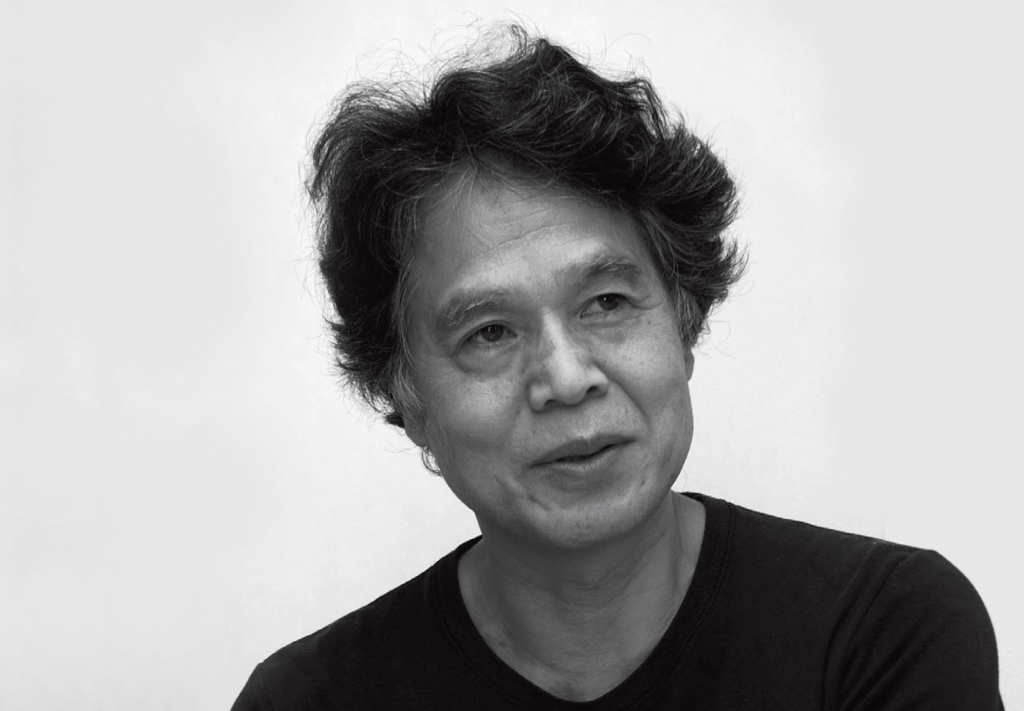
Every time is the first time. If I had to name one among the many wonders that unfold when encountering the books and creations of Katsumi Komagata, this would be my answer. For those unfamiliar with his work, the sense of wonder that comes from leafing through, reading, touching, absorbing one of his books is certainly the first and most immediate proof of the effect they have.
And yet this becomes almost secondary when, once bewitched by his paper magic — and this happens precisely, inevitably, from the very first time we open them — we find ourselves compelled to repeat the experience. I can swear to having seen, leafed through, admired and touched his books hundreds of times, and the true, great magic is exactly this: it is always the first time.
Fully aware of what will happen, familiar with the game, mindful of every previous encounter — and yet Komagata’s books release an untouched conceptual and material freshness every single time they are opened. So what is it that makes his work so magical? Let me try to define it briefly. Komagata is a rare case of an experimenter who is deeply conscious of the very essence of the book.
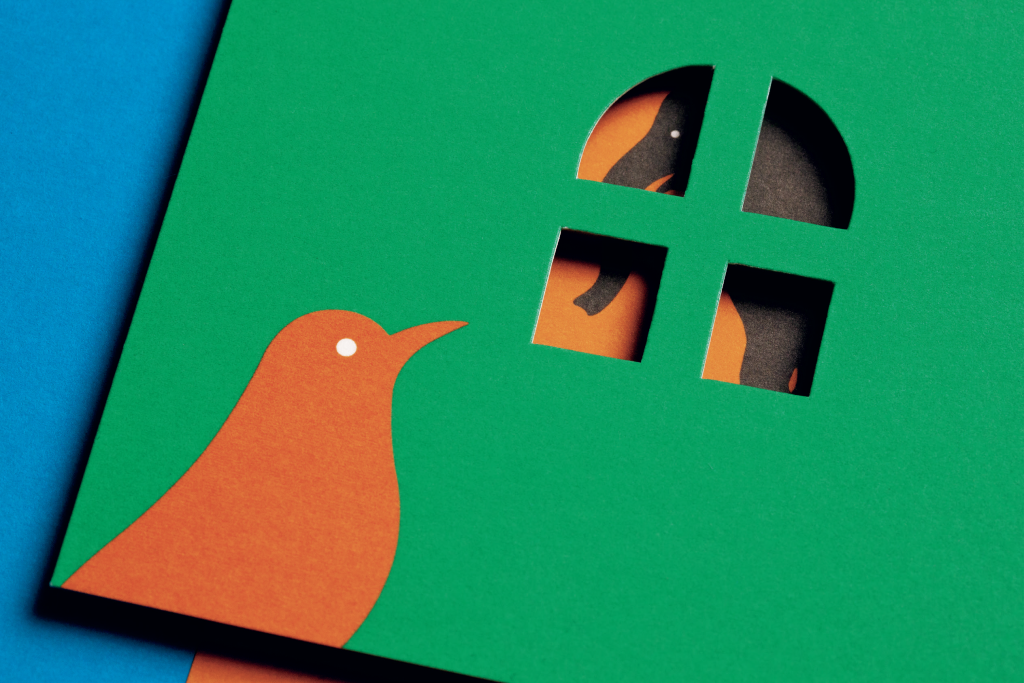
He needs no words, perhaps not even colour: his extraordinary skill in the play of cut-outs and shifting surfaces, his remarkable ability to make an emotional journey tangible — and vice versa — is matched by a precision in placing exactly what is needed and nothing more, in the name of a synthesis that is both formal and philosophical, leaving to the field of our imagination, however wide or narrow, the task of producing what is missing each time, what completes and personalises the path he has traced.
These qualities, together with his insistence, work after work, on an essential quality of “bookness” — the idea that the book is a completely self-sufficient object, a machine for generating answers, stimuli and emotions without needing anything beyond itself — are the great secret hidden within his poetic creations.
Suggested articles


Books beyond words
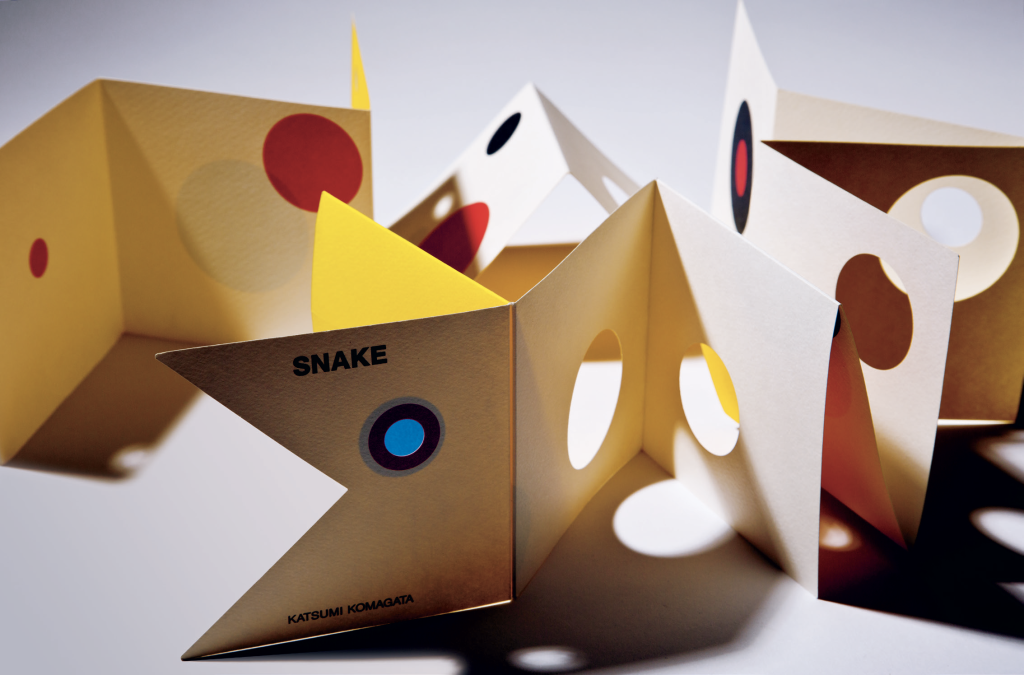
A universe of paper and pages, of curves and lines, of holes and voids and solids and colours and forms: nothing escapes Komagata’s attention; and of course, when needed, he adds words too, to achieve the desired effect. To astonish, to move, to provoke thought and to create experience.
The remarkable thing is that his books are not children’s books at all, and least of all toys: they are poetic distillations of the questions humanity has always asked, precisely because they confront large and important themes, and they are precise, clear accounts of our answers — at least those we are capable of giving.
Komagata’s books probe the deep structure of how we perceive the world around us: they teach and let us learn, at one and the same time; they offer answers or leave imaginary solutions open, they expand the mind and reveal to the heart truths we may already know, but which we learn too quickly to conceal, burying them beneath layers of words — often self-deceiving ones.
Let me try to explain what I mean with a practical example, starting from one of his masterpieces — perhaps the most poetic, moving and immediate, and certainly the one I hold most dear: Little Tree, whose unfolding pages mirror our very existence.
Suggested books


Little tree
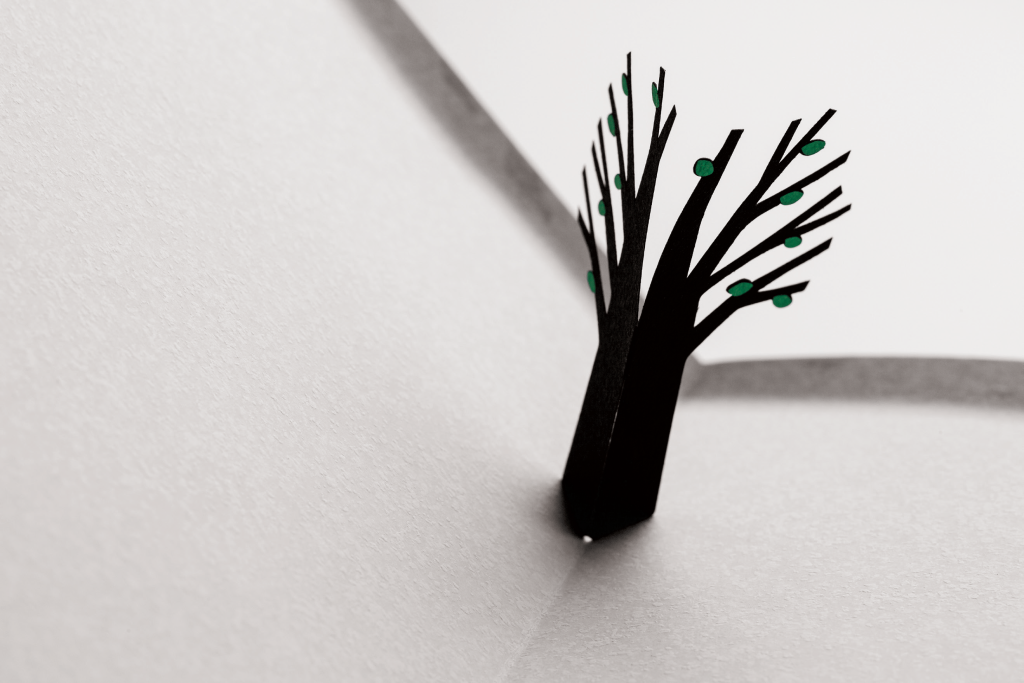
At first, you do not notice it. Among the snow, between two white satin pages, slightly rough yet soft, a small tree is born. A pyramid, a protrusion, right at the fold between the pages.
Slowly, page by page, following the cycle of the seasons, the little tree grows. It puts out leaves, develops branches, faces spring, blazes through summer. Then the autumns, the snows again, and the tree grows, grows… It stretches its boughs now between the pages; birds can nest among its branches.
The colours — powerful yellows, stirring oranges, deep greens, the darkest of nocturnal blacks, dark nights and nights of blazing stars. Life passes: the tree ages and… dies. Those who return to find it, year after year, suddenly can no longer see it.
But in the silence of the snow, on the last page, a seed has gone somewhere, into the earth, and life begins again. Life is a small paper pyramid between two white pages. Life is a book…
Munari’s most worthy heir
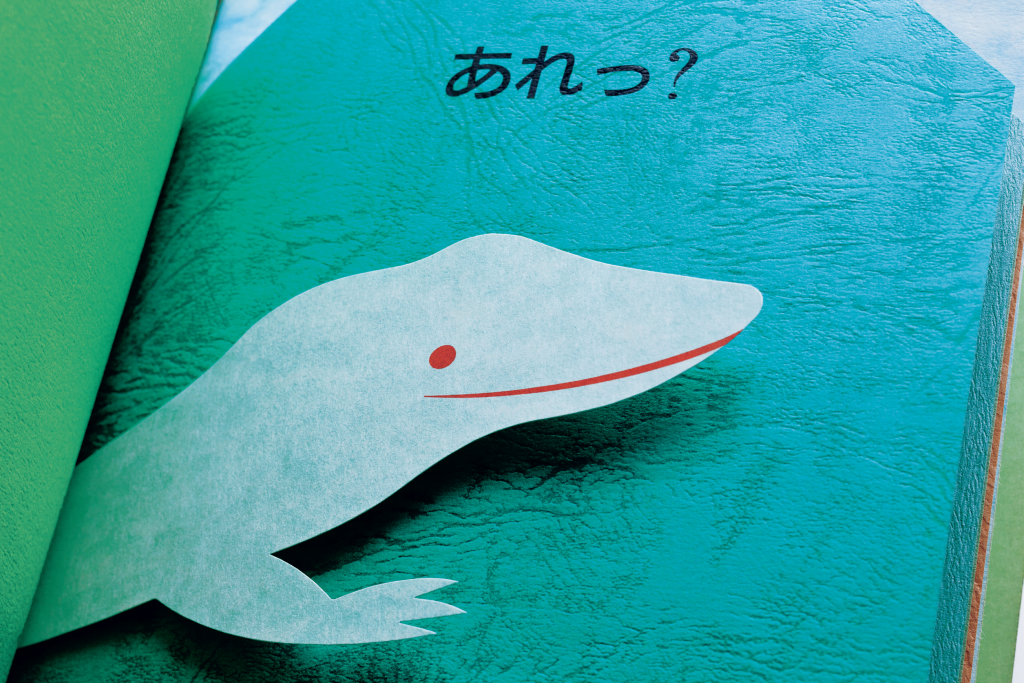
Komagata’s Japanese philosophy — the essentiality of form as substance — was immediately recognised by Bruno Munari, of whom one might say, without much fear of contradiction, that Komagata is the most worthy heir.
And yet this comparison, made a thousand times, only convinces me up to a point. Komagata is a master who moves in a direction related to, but distinct from, Munari’s: although triangles, cuts, geometric shapes and the use of holes in the page are also his staple, he is, in my view, less playful than Munari — and more poetic, more immediate, more concrete.
Komagata uses the book to explore tactile meanings and ways of knowing that often reach us, if at all, only intuitively. The story goes that this Japanese designer, born in 1953 in the province of Shizuoka, after winning awards as a graphic designer and working in the United States, decided — with the birth of his daughter Aï in 1990 — to look at the world through her eyes, and to show us, through books, how children — that is, how we — understand, learn and smile.
Like when we were children
It is an extraordinary journey, one that now spans dozens of titles, and these are certainly not books for children alone. The tireless and admirable work of the Les Trois Ourses bookshop in Paris in championing and spreading Komagata’s vision has been remarkable.
For what Komagata has brought to the children’s book, if one insists on that category, amounts to nothing less than a revolution. His books are made to be touched and used even more than to be seen. Handling his creations, playing with them, bringing them to life, discovering the tactile and sensory beauty they offer — a joy made of paper, poetry and learning — is the finest tribute we can pay to his genius.
Birth, death, the very coming into the world, movement, revelation, concealment. A world made of clouds, rain, animals, abstract and utterly concrete forms. Komagata denies himself nothing, because he fears no subject. Always with a fresh, surprising, wonderful approach. And with an intention, half-hidden but not quite, that it is beautiful to rediscover the truths each work holds in store, every time as if for the first time.
Trust me: if you do not have his books, get them. If you already do, leaf through them again. It will be like finding old, faithful friends; like remembering what it felt like to be small, when the universe revealed surprises at every breath of wind, every flowering meadow, every cloud, every storm.
With Komagata’s books, we do not become children again — we remember what it is to be one, now that we are grown. And it is a rediscovery of our deepest, most essential self. Who would have thought that paper — simple paper — could work a miracle so intense, and repeat it so many times?
Stefano Salis is a journalist and senior editor at Il Sole 24 Ore, where he is responsible for the Opinion page and the Sunday supplement. He writes regularly on bibliography, publishing, art, design and literature.